By Grace Callahan
The start to my ADHD story is a common one. I had always been described as a bright kid by my teachers – I retained short-term information with ease, picked up new skills quickly, and thought outside of the box. Throughout elementary and middle school, I excelled effortlessly. I was getting A’s and B’s without studying or spending a lot of time on assignments. It wasn’t until my sophomore year of high school that the workload caught up with me. Suddenly, I needed to actually apply myself, and I had never developed study skills or time management. I was overwhelmed and underprepared, and I floundered. I struggled to keep up with the speed of the material and the intensity of the assignments.
My grades plummeted, my identity as a bright kid – something I prided myself on – fractured, and I became depressed. My classmates, who had previously worked to keep up with me in lower school, now surpassed me academically, and it was hard not to compare myself to them. How do they process everything so quickly, stay engaged with the material that’s so uninteresting it’s painful, and plan their time so they aren’t waking up in a cold sweat at 3 am to finish a project they forgot about? How do they do it all so easily? And why can’t I?
At 16, I was diagnosed with ADHD. It was a relief to finally know, and I began to forgive myself for falling short of my expectations. Getting prescribed Adderall definitely helped and so did developing coping strategies to work around my task-paralysis and difficulties with organization. The significant change, though, came from the shift in how I, and others, perceived my struggles. I was fortunate enough to have a handful of incredibly supportive teachers who saw my excitement to learn, upheld my IEP, and cheered me on, and my academic performance recovered. Of course, there were the teachers who didn’t understand how to work with me, and we’d both walk away from class frustrated, but at least I knew why.
At the same time, I had newfound shame to grapple with. As I learned more about ADHD, I noticed how my disability affected me outside of academia – I would interrupt my friends, laugh louder than everyone else, jitter in my seat, open my mouth to speak, and hear my thought process bob and weave its way to my point. Does everybody know? Being a girl only added an extra layer of difficulty. I had a couple of friends who talked about having ADHD, but they were both boys. The way I felt and the way people received me were different. I felt pressure to make myself smaller and more palatable. Immediately after my diagnosis, I started masking (although, at the time, I didn’t know the name for it). I began mirroring other people’s physicality and tone, suppressing my stims, and vigilantly monitoring how often I spoke in conversation. Hiding it was exhausting.
When it came time to think about college, I was hyper-aware of my differences and anxious about all the new what-ifs. What if my professors hate my scatterbrain? What if my roommate hates how messy I am? What if I can’t budget my money on my own? What if the Office of Disability Services at my college isn’t helpful? What if I lose my support?
It was helpful to shift my focus away from the logistical unknowns and consider how I wanted to feel about my education. I knew I wanted to feel passionate about what I do because my passion drives my engagement. I knew I wanted to feel challenged because I’m motivated by problem-solving. I knew I wanted to feel a sense of community because my connections with people energize me.
In high school, I had found my home in the theatre world. Artistry was less of a hobby and more so how my brain processed. The fast pace, the consistent novelty, and the intense personal connections meshed seamlessly with the way I functioned. It felt natural to continue pursuing theatre in college. Although I needed help managing the application process (and admittedly, I made many of the deadlines by the skin of my teeth), I was proud of the work I was doing, and I was well-received during interviews and auditions. I ended up committing to a B.A. in Theatre Studies at Ithaca College, which was ranked #2 in the nation for its theatre program.
When meeting with Disability Services for the first time, I was presented with much more control over my accommodations than I expected. The conversation went something like this: “Here’s the list of accommodations we offer. Which ones do you want to use?” To which I said, “Umm… All of them, I guess.” Is that the wrong answer? I got a funny look from the counselor, but she filled in all the boxes anyway. Perhaps it was excessive, but my preference was to have the accommodations I didn’t need instead of discovering I didn’t have the ones I did need. The accommodations I ended up using consistently were access to lecture slides, access to a note taker, extended time on exams, and alternative testing locations. I also met with my professors about secondary support, like asking for information to be repeated or asking for information to be given in writing rather than verbally.
Even with my accommodations, the first semester was tough to say the least. The transition to college is hard for everyone, and my mind struggled to categorize all the newness. I was on high alert, constantly looking for all the potential ways I could mess up, and hyper-sensitive to the moments in which I did fail. Every stupid comment in class, every social blunder, every forgotten deadline weighed on my shoulders, and they weighed so much more than my successes. My failures were paralyzing. I was in a near-constant state of fight or flight.
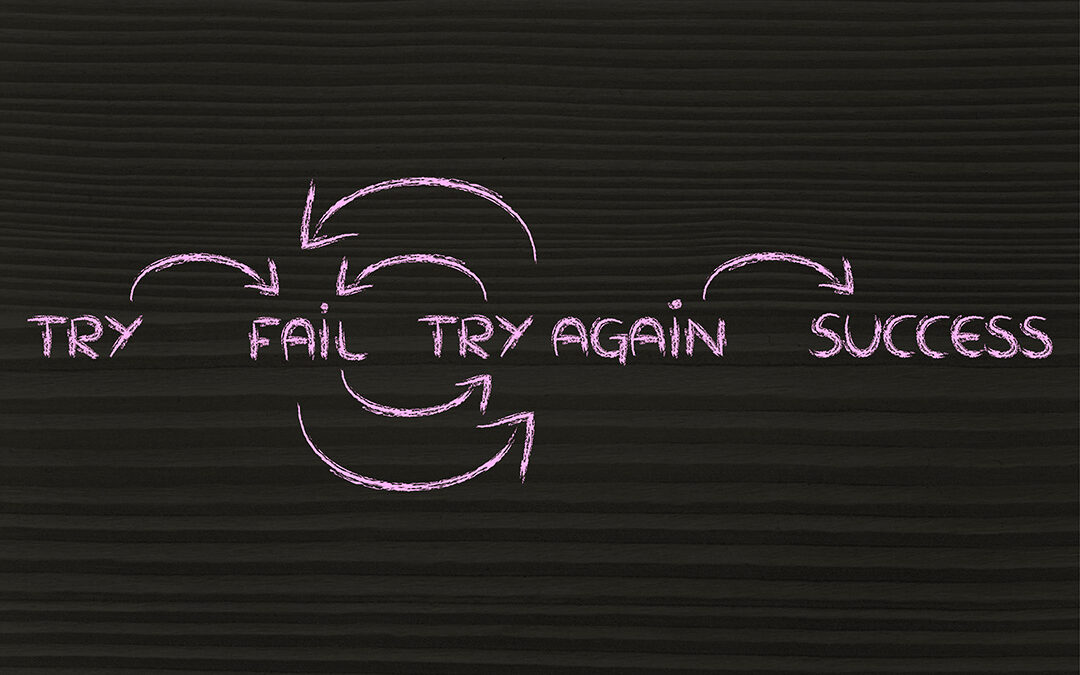
That changed for me in my Acting I class. My professor had us play a game, throwing a ball around in a circle, saying the name of the person who threw it to us, and then the name of the person we were throwing it to. The ball moved faster and faster, and more and more balls were introduced. The cacophony of names and storm of balls was overwhelming. Our brows furrowed and our eyes widened – panic. Naturally, someone eventually dropped the ball. My professor stopped, threw her hands in the air, and began to cheer. “Failure is a symptom of effort,” she said. “The bigger you fail, the harder you try, and your failure deserves celebration.” I had never thought of it like that. So, the game went on. We challenged each other to move faster and faster, and every time the ball dropped, we stopped and cheered, clapping and laughing together – genuine joy.
That lesson stuck with me. I relaxed and began to take my mask off. I was pleasantly surprised to discover that my authenticity was not only understood but embraced. My energy, animated nature, and nonlinear thinking were my strengths. I connected ideas across subjects, brought fresh perspectives to classroom discussions, and approached my education with a sense of play, often bending the frameworks of assignments in order to explore my ideas in unconventional ways. I can do this! Sometimes I caught myself speaking without thinking, and sometimes I forgot things, and sometimes I failed exams, but my failures always taught me something that I could apply to my next challenge. The realization that failure has no moral standing not only changed my attitude towards my education, but it has also shaped how I move through the world at large. It’s only possible to drop the ball because I picked it up in the first place.
 .
.