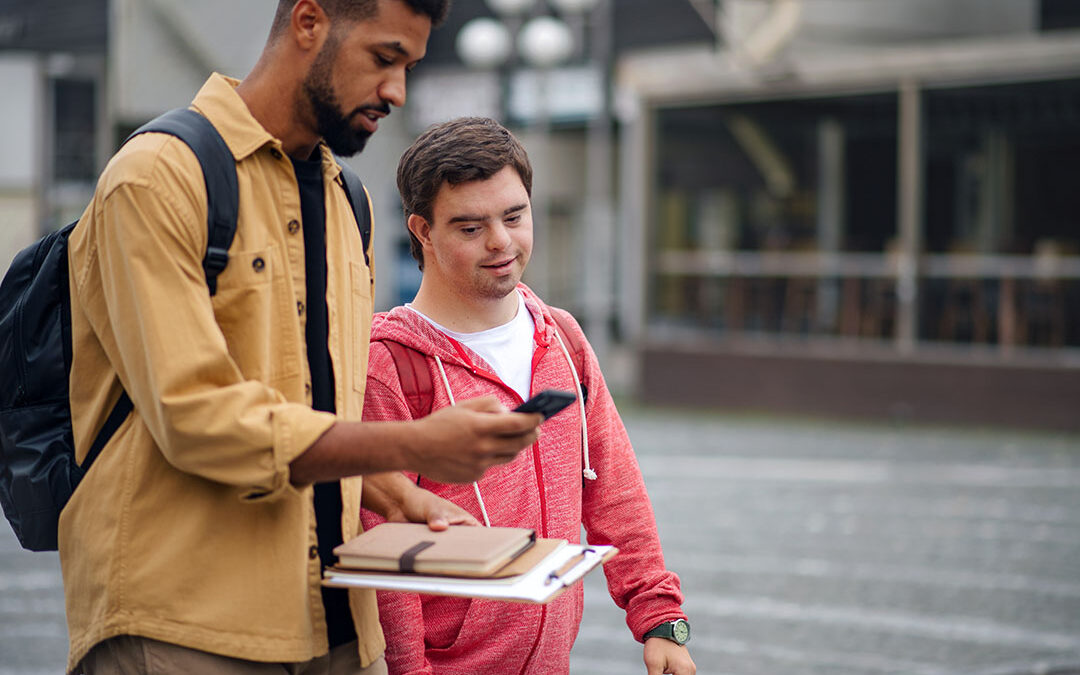
Special education aims to provide students with disabilities the skills and supports necessary to participate as independently and successfully as possible in school, work, and community settings. While classroom instruction is essential for developing academic and functional skills, many students benefit from opportunities to practice these skills in real-world environments. Community-based instruction (CBI) is an instructional approach that allows students to learn and apply important life skills within natural community settings. Through experiences reading a train schedule, following a visual checklist, crossing the street and practicing employment skills, students are able to connect classroom learning to everyday life. CBI promotes independence, self-confidence, and meaningful participation in society while supporting the broader goal of preparing students for successful transitions into adulthood.
CBI helps students develop functional skills for independent living, employment, and community participation. Many skills that are taught in schools, such as money management, communication, problem-solving, and safety awareness, can be put into action when students practice them in the settings where they will actually use them.
For students with disabilities, transferring skills from one environment to another can sometimes be challenging. A student may know how to identify money in a classroom activity but may need direct practice to use those skills while making a purchase at the supermarket or the bank CBI provides opportunities for students to generalize their learning by practicing skills in authentic situations. This approach is especially important for students who are preparing for adulthood because it helps connect educational goals with practical outcomes.
CBI is also closely connected to transition planning, which is required for students receiving special education services as beginning at age 14. Transition planning focuses on preparing students for life after high school, including employment, further education, independent living, and community involvement. By incorporating CBI into students’ educational programs, schools can provide experiences that support these long-term goals.
One of the primary benefits of CBI is that it promotes greater independence. Many students with disabilities need opportunities to practice daily living skills repeatedly before they can perform them confidently on their own. Activities such as grocery shopping, ordering food at a restaurant, managing money, or asking for assistance in the community provide valuable practice that cannot always be replicated in a classroom.
CBI also supports the development of social and communication skills. Community environments require students to interact with a variety of people, follow social expectations, and communicate their needs effectively. For example, a student practicing shopping skills may need to ask an employee for help, respond to questions, or complete a transaction. These experiences help students build confidence and improve their ability to navigate social situations.
Another important benefit of CBI is increased self-determination. When students learn how to make choices and complete tasks independently, they gain a stronger sense of control over their own lives. Community experiences can help students recognize their abilities and participate more actively in their communities. Rather than learning skills only for practice, students see how those skills contribute to real-life independence.
Additionally, CBI can promote inclusion by giving students opportunities to participate in community activities alongside individuals without disabilities. These experiences can challenge assumptions about disability and encourage greater understanding and acceptance within the community.
Challenges and Considerations
Although community-based instruction provides many benefits, schools may face challenges when implementing these programs. One common barrier is access to transportation. Schools may need additional resources to transport students to community locations, and transportation schedules can make planning difficult. Funding, staffing, and time constraints may also affect how frequently CBI opportunities are provided.
Another challenge is ensuring that community activities are meaningful and connected to students’ individual goals and needs. CBI should not simply involve taking students into the community without a clear instructional purpose. Activities should be intentionally designed to teach skills that improve students’ independence and quality of life. Community settings should be appropriate for students with different physical, sensory, communication, and learning needs. Providing necessary accommodations ensures that all students can participate successfully.
Despite these challenges, careful planning and collaboration can help schools overcome barriers and create effective community-based learning experiences. When implemented thoughtfully, CBI can become an important component of a comprehensive special education program.
Planning and Implementing Effective CBI
Successful community-based instruction requires careful planning and should be connected to each student’s individual needs and goals. Because students have different strengths, challenges, and interests, CBI activities should be based on the objectives outlined in their Individualized Education Programs (IEPs). For example, one student may focus on improving communication skills in a community setting, while another may work on employment-related skills.
Effective CBI requires collaboration among special education teachers, paraprofessionals, families, and community members. Teachers must identify appropriate environments, develop instructional strategies, and determine how students will be supported during community activities. Families can provide valuable insight into skills that are important for students to practice outside of school, while community partners can help create meaningful learning opportunities.
Instructional strategies such as modeling, prompting, task analysis, and reinforcement are often used during CBI. Teachers may break complex activities into smaller steps and gradually reduce support as students become more independent. For example, learning to use public transportation may involve first identifying a bus stop, then reading a schedule, purchasing a ticket, and eventually completing the trip independently. Students need instruction on how to navigate unfamiliar environments, interact safely with others, and respond to unexpected situations. Proper planning and supervision help ensure that community experiences are both educational and safe.
By providing opportunities to practice functional, social, and vocational skills in real-world environments, CBI helps students connect classroom learning to everyday experiences. Although implementation may require significant planning, resources, and collaboration, the benefits of community-based instruction make it a valuable approach in special education. Through intentional and individualized instruction, schools can support students in building confidence, increasing independence, and preparing for successful futures beyond the classroom.
 .
.